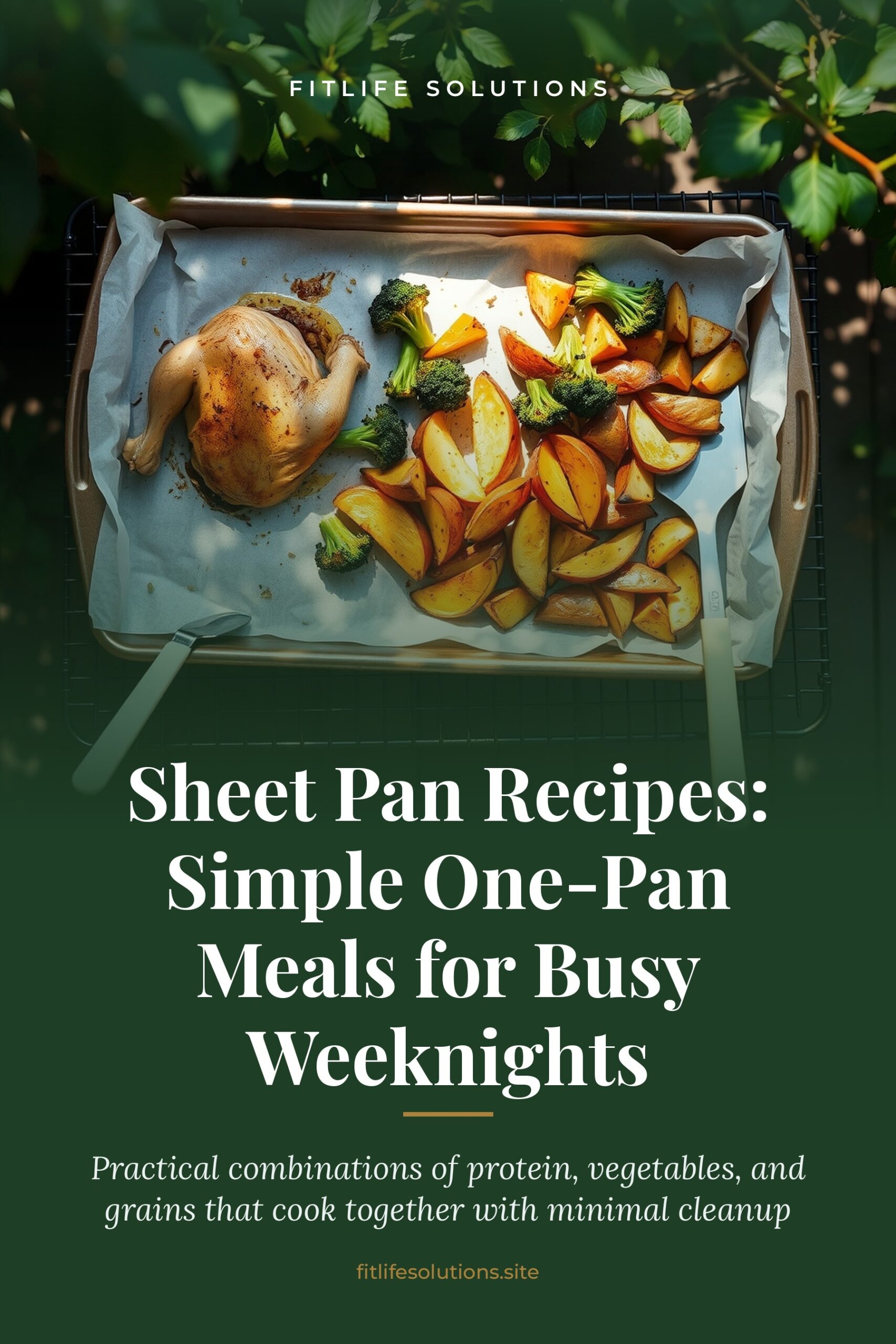
Sheet Pan Recipes: Simple One-Pan Meals for Busy Weeknights
Practical combinations of protein, vegetables, and grains that cook together with minimal cleanup.
From the introduction
This book is for home cooks who want a reliable weeknight dinner on the table in under an hour with minimal cleanup. You do not need professional equipment, advanced knife skills, or a pantry full of specialty ingredients. A rimmed baking sheet, an oven, and a handful of staples are enough.
What’s inside, chapter by chapter
Chapter 1: Building a Balanced Sheet Pan: Protein Portions, Vegetable Density, and Starch Timing
Protein is the centerpiece of most sheet pan meals, and portion size determines whether the pan cooks evenly. A crowded pan steams instead of roasts, leaving proteins pale and vegetables soggy.
Chapter 2: Chicken Thighs and Root Vegetables: Mastering Carryover Heat for Even Doneness
Carryover heat is the continued rise in internal temperature after food leaves the oven. Dense pieces such as bone-in chicken thighs keep climbing a few degrees during a ten-minute rest, and the vegetables on the pan keep softening too.
Chapter 3: Salmon and Quick-Cook Greens: Preventing Overcooked Fish While Vegetables Stay Crisp
Salmon cooks fast. A half-inch fillet cooks through in roughly eight to ten minutes at 425°F (220°C).
Chapter 4: Plant-Based Mains: Tofu, Tempeh, and Legumes That Hold Texture Under High Heat
Not every plant protein behaves the same way in a hot oven. Firm and extra-firm tofu hold their shape when pressed and cubed, developing a golden crust on the edges while staying tender inside.
Chapter 5: Breakfast and Brunch Trays: Eggs, Potatoes, and Seasonal Produce for Morning Crowds
A rimmed half-sheet pan (13 by 18 inches) fits two dozen eggs worth of frittata or a full tray of roasted potatoes with vegetables. For larger groups, use two pans and rotate them halfway through — swap top and bottom racks at the 10-minute mark to even out hot spots.
Chapter 6: Sauces, Glazes, and Finishing Touches: Flavor Layers Added Before, During, and After Roasting
Dry rubs and marinades applied before roasting create the first flavor layer. A dry rub — salt, spices, dried herbs, sometimes a pinch of sugar — draws moisture to the protein surface where it dissolves the seasoning and forms a brine that penetrates shallowly.
What you receive
- A digital eBook – PDF and EPUB. Nothing physical is shipped.
- One-time payment of $37. No subscription.
- Payment and refunds are handled by Digistore24 (60-day refund policy).
This book is for general information and education only. It is not a substitute for medical advice, diagnosis or treatment. Always consult your doctor before changing your diet, exercise or medication.