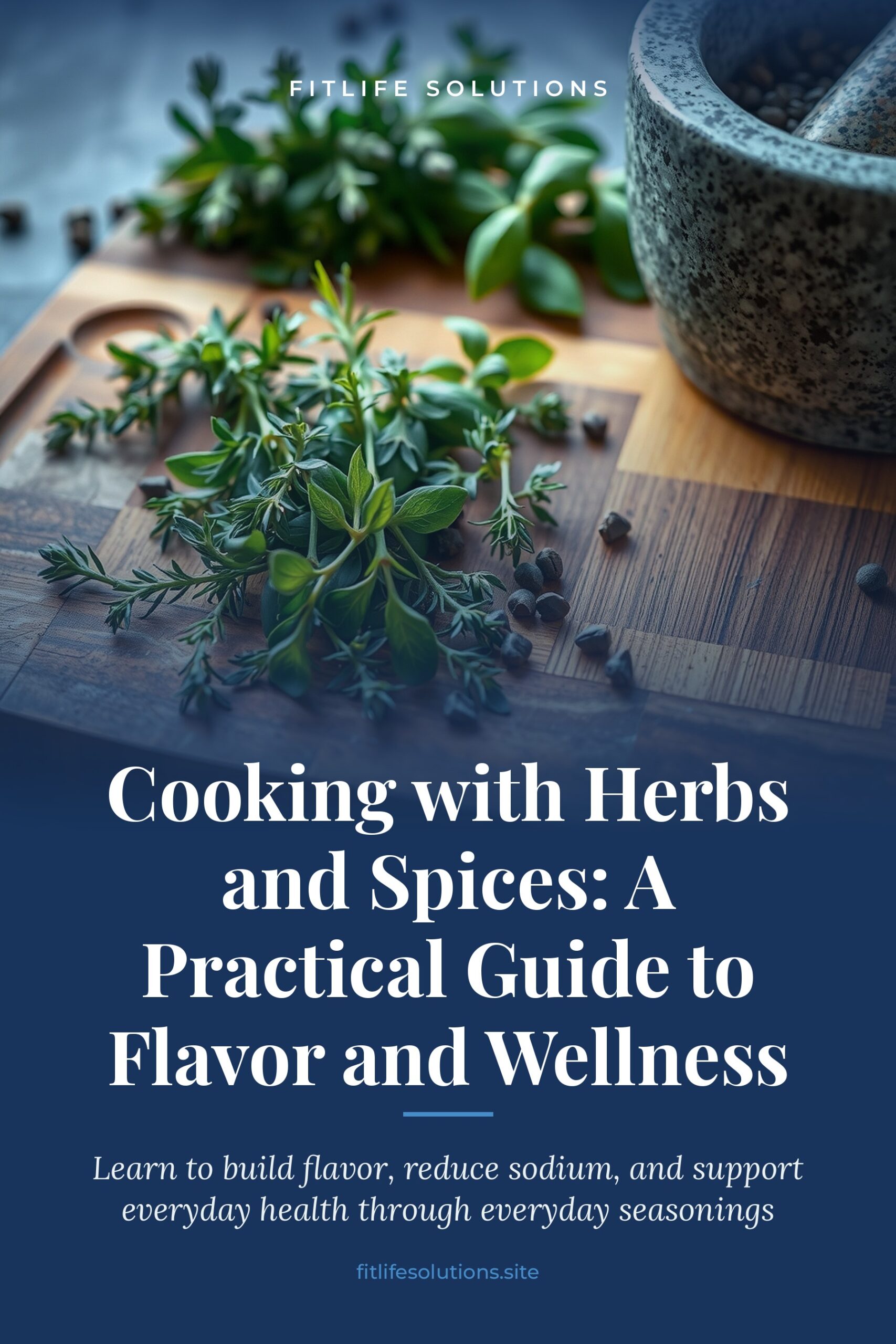
Cooking with Herbs and Spices: A Practical Guide to Flavor and Wellness
Learn to build flavor, reduce sodium, and support everyday health through everyday seasonings.
From the introduction
This book is written for home cooks who want to move beyond following recipes by rote and start understanding why herbs and spices work the way they do. You might be someone who has a spice drawer full of jars you rarely open, or someone who buys fresh herbs only to watch them wilt before you use them. You do not need professional training, expensive equipment, or a pantry stocked with dozens of exotic ingredients.
What’s inside, chapter by chapter
Chapter 1: Building a Core Pantry: Essential Herbs and Spices for Daily Cooking
A well-stocked herb and spice collection does not need to be large. Most home cooking draws from a small set of versatile ingredients that appear again and again across cuisines.
Chapter 2: Flavor Pairing Principles: Matching Herbs and Spices to Proteins, Vegetables, and Grains
Every herb and spice brings a dominant flavor characteristic — earthy, citrusy, pungent, sweet, bitter, or aromatic. Learning to recognize these profiles helps you decide what will complement a given ingredient rather than clash with it.
Chapter 3: Reducing Salt Without Sacrificing Taste: Practical Sodium-Reduction Techniques
Salt enhances flavor by suppressing bitterness and amplifying sweet and umami notes. Most dietary sodium comes not from the shaker but from processed foods, restaurant meals, condiments, and baked goods.
Chapter 4: Fresh vs. Dried: Selection, Storage, and When to Use Each Form
Fresh herbs and dried herbs come from the same plants, but they behave differently in cooking. Fresh herbs contain volatile oils in their leaves and stems that give them bright, green, sometimes grassy aromas.
Chapter 5: Global Flavor Foundations: Core Herb and Spice Blends from Five Culinary Traditions
Herbes de Provence, za'atar, and baharat form the backbone of everyday cooking across southern France, the Levant, and the Arabian Peninsula. Herbes de Provence typically combines dried thyme, rosemary, oregano, marjoram, and sometimes lavender.
Chapter 6: Everyday Applications: Simple Recipes and Meal Templates That Put Herbs and Spices Center Stage
A meal template gives you a repeatable structure you can adapt with whatever protein, vegetable, or grain you have on hand. The herb and spice combination becomes the signature that changes the dish from one cuisine to another without changing the method.
What you receive
- A digital eBook – PDF and EPUB. Nothing physical is shipped.
- One-time payment of $37. No subscription.
- Payment and refunds are handled by Digistore24 (60-day refund policy).
This book is for general information and education only. It is not a substitute for medical advice, diagnosis or treatment. Always consult your doctor before changing your diet, exercise or medication.