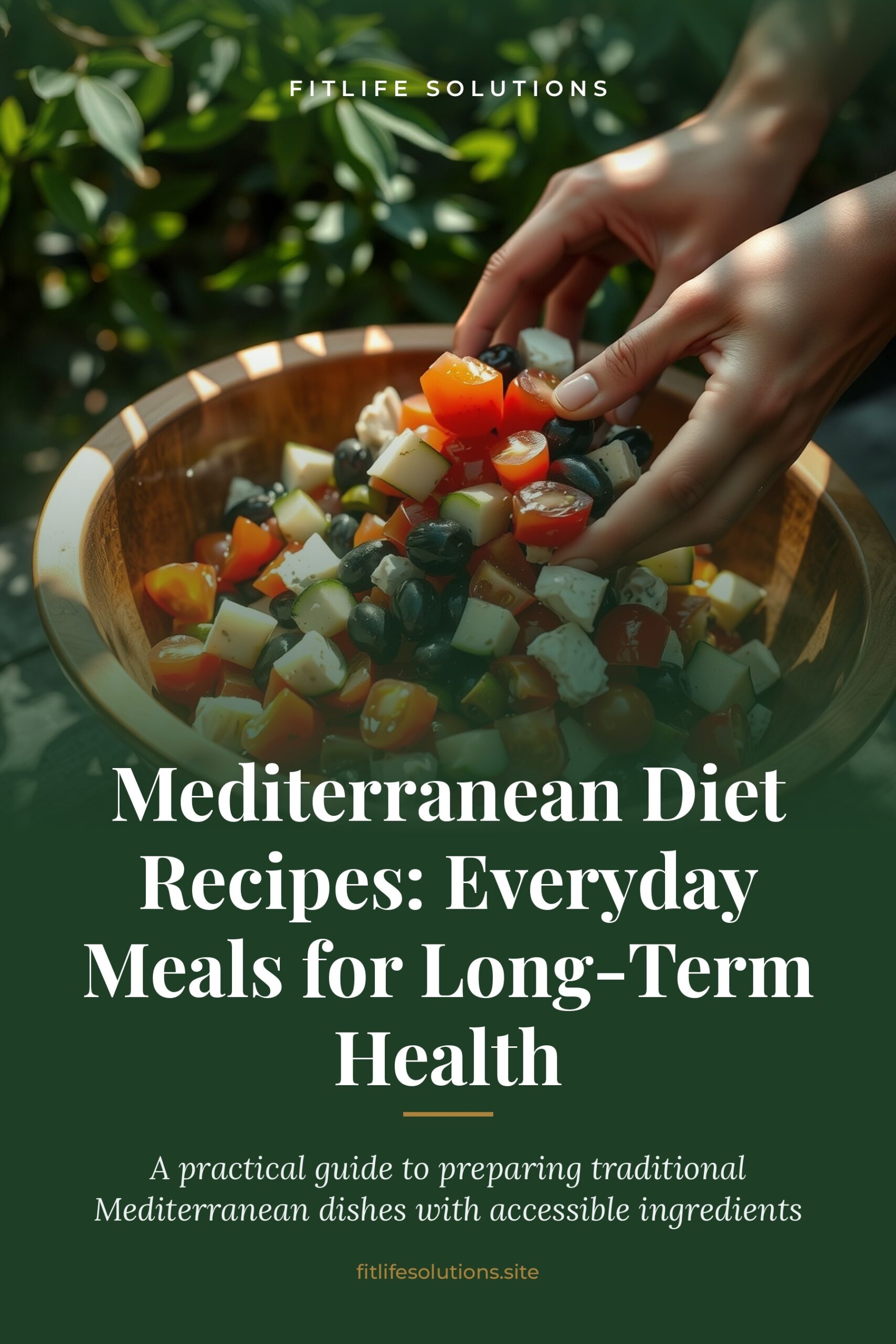
Mediterranean Diet Recipes: Everyday Meals for Long-Term Health
A practical guide to preparing traditional Mediterranean dishes with accessible ingredients.
From the introduction
This book is for adults who want to adopt an eating pattern supported by decades of nutrition research without overhauling their kitchen or budget. The Mediterranean eating pattern emphasizes vegetables, fruits, whole grains, legumes, nuts, olive oil, and moderate amounts of fish, poultry, dairy, and eggs. It limits red meat, added sugars, and highly processed foods.
What’s inside, chapter by chapter
Chapter 1: Foundations of the Mediterranean Eating Pattern
The Mediterranean eating pattern is not a diet in the restrictive sense. It is a collection of traditional dietary habits observed in countries bordering the Mediterranean Sea — particularly Greece, Italy, Spain, and southern France — during the mid-20th century.
Chapter 2: Building a Mediterranean Pantry on Any Budget
A Mediterranean pantry rests on a handful of food groups: extra virgin olive oil, whole grains, dried and canned legumes, canned tomatoes, nuts and seeds, dried herbs and spices, vinegars, and a few shelf-stable vegetables. You do not need every item at once.
Chapter 3: Breakfast and Light Morning Meals
Mediterranean breakfasts vary by region but share common threads. In Greece, a typical morning might include thick yogurt with honey and walnuts.
Chapter 4: Lunch Dishes: Vegetables, Legumes, and Whole Grains
Mediterranean lunches center on vegetables, legumes, and whole grains because these foods make a filling meal that many people find easier to carry through the afternoon than a heavy, refined one. The pattern is simple: a generous portion of cooked or raw vegetables, a serving of legumes or whole grains, olive oil, and an acid like lemon juice or vinegar.
Chapter 5: Main Meals: Fish, Poultry, and Plant-Based Proteins
Mediterranean eating patterns include fish two to three times per week. Choose fresh or frozen options based on access and budget.
Chapter 6: Desserts, Snacks, and Seasonal Preserves
Mediterranean desserts rely on fruit as the primary source of sweetness. Seasonal fruit at peak ripeness provides flavor complexity that refined sugar cannot match.
What you receive
- A digital eBook – PDF and EPUB. Nothing physical is shipped.
- One-time payment of $37. No subscription.
- Payment and refunds are handled by Digistore24 (60-day refund policy).
This book is for general information and education only. It is not a substitute for medical advice, diagnosis or treatment. Always consult your doctor before changing your diet, exercise or medication.