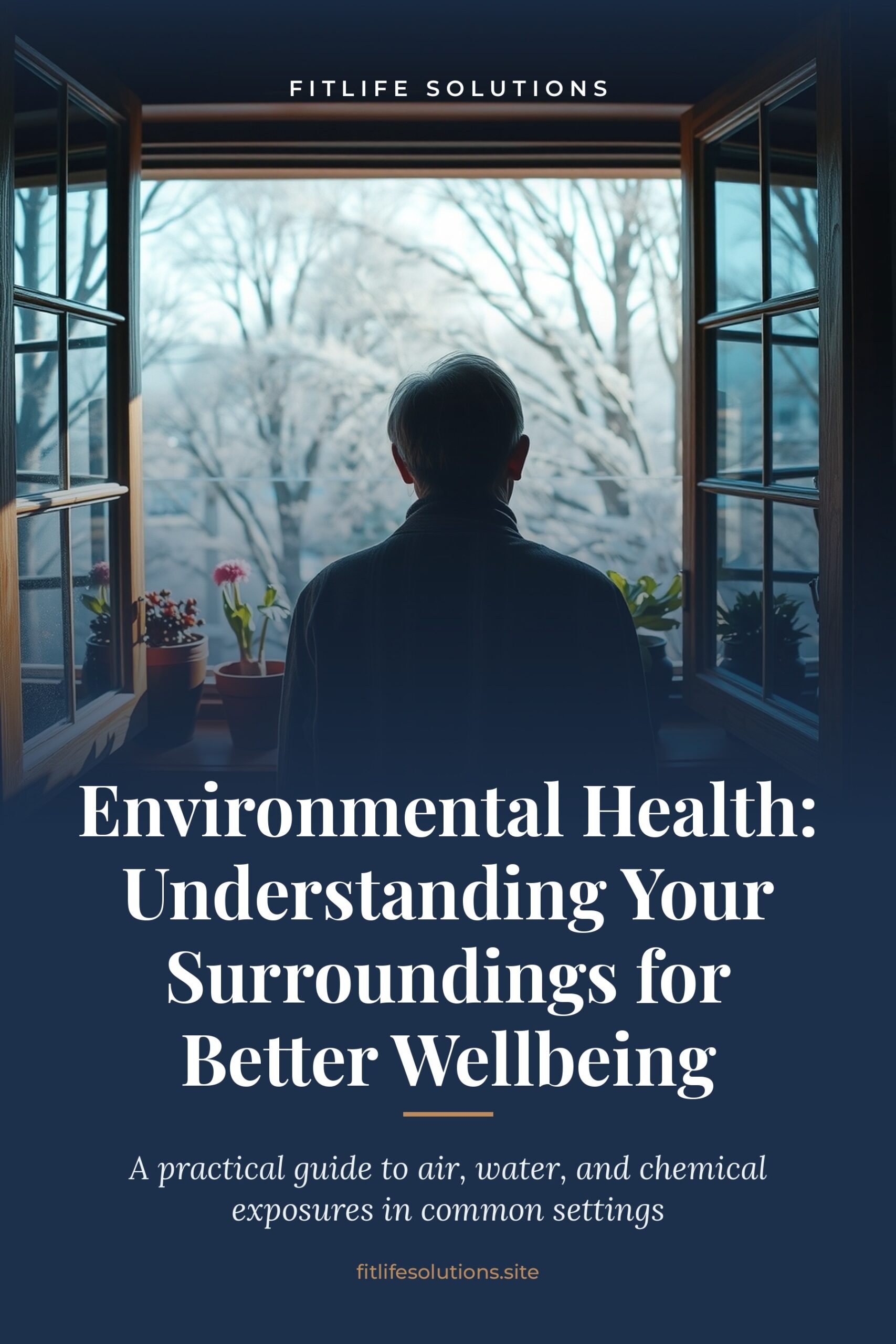
Environmental Health: Understanding Your Surroundings for Better Wellbeing
A practical guide to air, water, and chemical exposures in common settings.
From the introduction
This book is for adults who want to understand how their everyday environments affect their health and what they can do about it. You might be someone who has noticed recurring headaches, fatigue, or respiratory irritation that seems tied to certain spaces. You might be a parent trying to create a healthier home for children, or someone managing a chronic condition who suspects environmental triggers.
What’s inside, chapter by chapter
Chapter 1: Air Quality Indoors and Outdoors
Indoor air often contains higher concentrations of certain pollutants than outdoor air. Common sources include cooking emissions, cleaning products, building materials, furniture off-gassing, tobacco smoke, and biological contaminants such as mold, dust mites, and pet dander.
Chapter 2: Water Sources and Filtration Methods
The water that reaches your tap travels through a complex journey before it arrives at your home. Municipal water systems draw from surface water — rivers, lakes, reservoirs — or groundwater aquifers.
Chapter 3: Household Chemicals and Better Alternatives
Many everyday products contain chemicals that can affect health through inhalation, skin contact, or ingestion. Cleaning sprays, air fresheners, laundry detergents, dish soaps, personal care products, and pesticides are frequent sources.
Chapter 4: Building Materials and Hidden Toxins
Many homes and workplaces contain materials installed decades ago that can release harmful substances over time. Asbestos, used in insulation, floor tiles, and pipe wrapping before the 1980s, becomes dangerous when damaged or disturbed, releasing microscopic fibers that can cause serious lung conditions.
Chapter 5: Occupational Environmental Hazards
Workplace environmental hazards fall into several broad categories that often overlap. Chemical hazards include solvents, heavy metals, dusts, fumes, and gases encountered in manufacturing, construction, agriculture, healthcare, and laboratory settings.
Chapter 6: Habitual Choices for a Healthier Environment
Opening windows for 5–15 minutes, two or three times a day (see Chapter 1), exchanges stale indoor air with fresher outdoor air, even in urban areas. Cross-ventilation — opening windows on opposite sides of a room — moves air more effectively than a single window.
What you receive
- A digital eBook – PDF and EPUB. Nothing physical is shipped.
- One-time payment of $37. No subscription.
- Payment and refunds are handled by Digistore24 (60-day refund policy).
This book is for general information and education only. It is not a substitute for medical advice, diagnosis or treatment. Always consult your doctor before changing your diet, exercise or medication.